

No products
Prices are tax included
Product successfully added to your shopping cart
There are 0 items in your cart. There is 1 item in your cart.
- English
- Castellano
- Català
 Sign Up
List of products by supplier: CLIVIS Publicacions
-
 11,34 €
Sonata per a piano
Edition: DigitalComposed during spring 1966, the Sonata for Piano is a fresh, direct work, structured in three movements and involving a certain amount of difficulty, even though it does not explore all the possibilities of the instrument or demand exceptional virtuosity from the player.
11,34 € -
 19,50 €
Sonata per a piano
Edition: PrintedComposed during spring 1966, the Sonata for Piano is a fresh, direct work, structured in three movements and involving a certain amount of difficulty, even though it does not explore all the possibilities of the instrument or demand exceptional virtuosity from the player.
19,50 € -
 21,85 €
Sonata per a saxòfon alt i piano
Edition: DigitalThis piece clearly shows post-impressionist traits, modal turns of phrase, a wealth of registers, a constant rhythm, a taste for chromatic modulations and a mastery of counterpoint. Although the alto saxophone is undoubtedly the protagonist throughout the piece, the piano is not restricted to an accompanying role but is instead clearly involved in the...
21,85 € -
 7,37 €
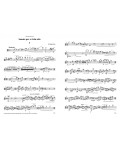
Sonata per a viola sola
Edition: DigitalFleta captures the public's attention to the use of all the resources of the viola with great skill, consistency and intelligence.
7,37 € -
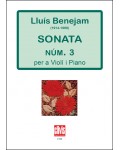 18,15 €
Sonata per a violí i piano núm. 3
Edition: DigitalThis is a mature and solid work in which the author once again demonstrates not only his knowledge of the possibilities of the solo instrument but also of the chamber music language.
18,15 € -
 21,20 €
 -
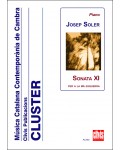 8,61 €
Sonata XI for left hand
Edition: DigitalThe possibilities of the piano within the grave range had been explored by several composers throughout the 20th century, but on this occasion, Soler’s music seeks out expressiveness rather than virtuosity.
8,61 € -
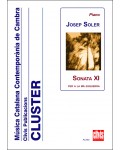 14,80 €
Sonata XI for left hand
Edition: PrintedThe possibilities of the piano within the grave range had been explored by several composers throughout the 20th century, but on this occasion, Soler’s music seeks out expressiveness rather than virtuosity.
14,80 € -
 7,56 €
Sonatina
Edition: DigitalThe Sonatina for piano is not an excessively difficult work from a technical point of view and, except for the third movement, as with many Sonatinas from the majority of composers, it is all imbued with a feeling of happiness appropriate for its nature as a Scherzo.
7,56 € -
 8,35 €
 -
 8,14 €
Sonatina líquida
Edition: DigitalThe Prelude and Dance follows a typical structure of Frederic Monpou, and the Finale closes the work.
8,14 € -
 14,00 €
Sonatina líquida
Edition: PrintedThe Prelude and Dance follows a typical structure of Frederic Monpou, and the Finale closes the work.
14,00 €
